Jimbo, Blackwood (1909)
Posted on Dec 10, 2025 in book
epub
for most devices
azw3
for kindle
jpg
cover for kindle
kepub
for kobo
adv epub
for advanced devices
report an issue
on github
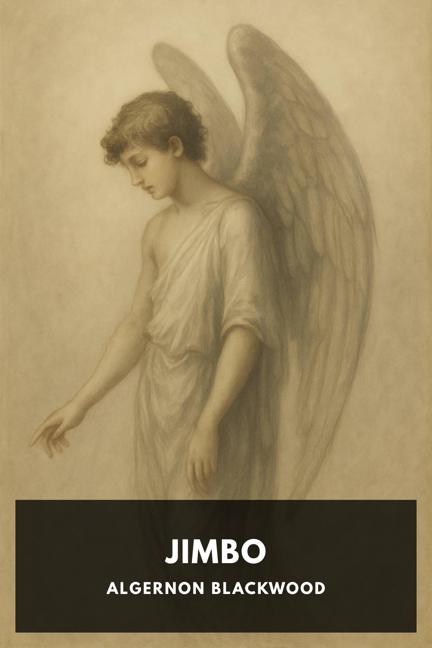
The novel Jimbo by Algernon Blackwood (1909).
Make a Little Birdhouse in Your Soul
In this novel, Algernon Blackwood recounts a story in the life of the young boy Jimbo. Specifically, this story is about Jimbo’s Soul. If the story has a message—and I believe it does—it is that adults have a duty to protect and fortify the souls of children. I found this work to be darker than I had expected.
While it is common for present-day authors to write their fiction in a “shared universe,” there is no “Blackwood Universe.” But those who read his work will find that his writings—fiction, non-fiction, and otherwise—do overlap; will share common elements, themes, ideas, imagery, and sometimes characters. The reader will come to see a “Blackwood Space.” Jimbo is well within “Blackwood Space.”
This story strongly evokes, for example, The House of the Past and Picking Fir Cones, and there are echoes of The Empty House, A Haunted Island, and even The Wings of Horus. The author often incorporates classic myth into his work. In this case, the myth he chooses to use, subtly, is Icarus.
But there is also a writing technique that is specific to this author: his distinctive method of perspective shift. Readers will recognize this from The Willows, which is perhaps his best-known work. Blackwood is quoted as saying (1927) that “real living is an interior affair” and this is a belief he actualizes when writing perspective shift. As the text unfolds across the page, some great change evolves and develops within the story. But, to an objective observer, it would seem that nothing really has much changed. All the development has come from within, where the “real living,” in the words of the author, goes on. Interior life is what drives this story and it is a story well worth reading.