The Japanese Empire: A Geographical Reader, Franck (1927)
Posted on Aug 25, 2026 in book
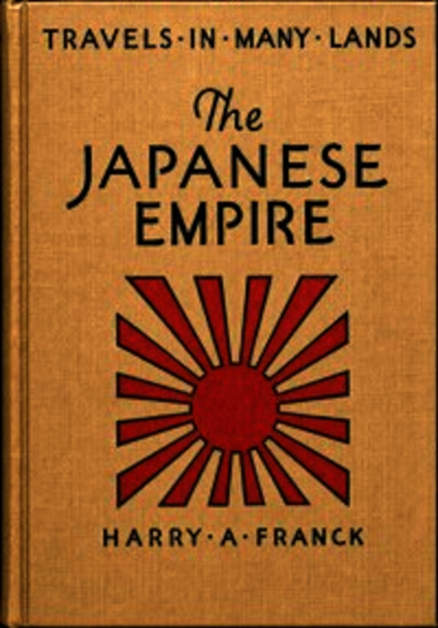
The Japanese Empire: A Geographical Reader is a travelogue in which Harry A. Franck describes his travels to broaden the horizons of American schoolchildren by exposing them to a foreign culture, describing what he sees in terms familiar to his young readers, generally in comparison to the American Midwest of a century ago.
The author’s reasons for writing this book no longer exist, but reasons for reading it still do.
Much has happened since, and much has changed. The Japanese Empire at that time included both Korea and Taiwan, both of which he visits. Today, Korea is its own country — two countries, in fact — locked in enmity, a proxy war frozen in amber, their path to peace long stalled at cease-fire. Taiwan also is independent, though dependent on others to remain that way, while an ascendant China, frenemy to America, bides its time and claims otherwise. And, of course, the Japanese Empire is now simply Japan — Land of the Rising Sun (and sushi!).
If — as is said — the past is a different country, then both the author and his subject are foreigners to us, in a sense. But also, Asian culture is almost unimaginably close and accessible to American schoolkids today. Eating tofu, playing Pokémon, streaming Samurai Gourmet, skimming the auto-translated opinions of Japanese schoolchildren (and adults): none of this really seems foreign at all.
So, why read this thing?
For the original childhood reader, the War in the Pacific, America’s war against Japan, will become a central fact in their adult life. The author has no idea of this, though today’s reader can see clues in his text. History always looks different in the rearview mirror than in the windshield. Today’s reader has a century’s worth of spoilers the author did not have. Because of this naïveté, the author writes a book no modern writer possibly could.
He simply does what he does, sees what he sees, and writes it as he sees it. Not all the things he says or does (or writes) are things I would approve of — not that he needs my approval. The writing is simple. But it is interesting: a snapshot of this specific place and time, a view of inter-war history as seen without the intervening lens of Pearl Harbor, Bataan, and Hiroshima. It is worth reading, not despite its age, but because of it. It may well broaden the modern reader’s horizons, too.